You want expanded possibilities
You are drawn to the added sexual, reproductive, and personal possibilities that come with integrated phallic and scrotal anatomy.

Series 2 is the sperm-producing pathway for clients seeking integrated phallic and scrotal anatomy while retaining the capacity to carry a pregnancy.
The spermatogenic-conversion pathway (Series 2) is designed around a new reproductive role. It introduces integrated phallic and scrotal anatomy, converts ovarian tissue into paired sperm-producing gonads, and preserves the uterus, vaginal anatomy, and capacity to carry a pregnancy.
The phallus is formed from a tissue-engineered graft grown from the client’s own cells, with its sensory foundation built around preserved clitoral tissue and neurovascular structures. The urethra is extended through the new anatomy, while the converted gonads are integrated within a newly formed scrotum with dedicated vascular, neural, and temperature-regulation support.
A specialized routing system directs most sperm-bearing fluid outward through the phallus while staging a smaller portion internally near the preserved uterus. This supports sperm-based conception with ovum-producing partners and allows the client to carry a pregnancy when a compatible ovum is provided.
Series 2 replaces ordinary ovarian ovum production, ovulation, and menstruation with a managed sperm-producing system. Pre-procedure egg retrieval and cryogenic storage are included to preserve future fertility options. For clients seeking complete phallic and scrotal anatomy, sperm-producing function, and retained gestational capability, Series 2 offers a distinct and complete NovaNex pathway.
Series 2 may suit clients who want the added sexual, reproductive, and personal possibilities of transformation together with a sperm-producing reproductive role.
It is designed for clients drawn to integrated phallic and scrotal anatomy, a distinct reproductive profile, and the flexibility to contribute sperm while retaining the option to carry a pregnancy.
You are drawn to the added sexual, reproductive, and personal possibilities that come with integrated phallic and scrotal anatomy.
You want phallic and scrotal anatomy together with a sperm-producing reproductive system as a complete, intentionally designed outcome.
You want a pathway that reflects your own sense of self, confidence, expression, and control over your body.
You want reproductive compatibility with ovum-producing partners, including non-transformed women and Series 1 clients, while retaining your own gestational options.
A fully sensate phallus with stable erectile function is paired with an external scrotum.
The urethra is routed through the phallus for natural urinary function.
Ovarian tissue is converted into paired testes designed for stable sperm production.
Most sperm-bearing fluid is released through the phallus, while a smaller portion is staged internally.
Neural and vascular structures are integrated across the new phallic, scrotal, and gonadal anatomy.
Gestational structure is retained and maintained in a ready-to-receive state.
Existing vaginal anatomy and receptive function are preserved.
A regulated hormonal framework continues without an ordinary ovulatory or menstrual cycle.
Clients retain the ability to conceive and gestate when a compatible ovum is provided.
Egg retrieval and cryogenic storage are included before conversion to preserve future IVF choices.
Your care pathway begins with a private consultation focused on your goals, medical history, anatomical preferences, and reproductive priorities. We'll explain how Series 2 changes gonadal function while preserving gestational capability, assess pathway suitability, and answer your questions before you decide how to proceed.
No commitment is required. You can review your pathway recommendation and fertility options before deciding whether to continue.
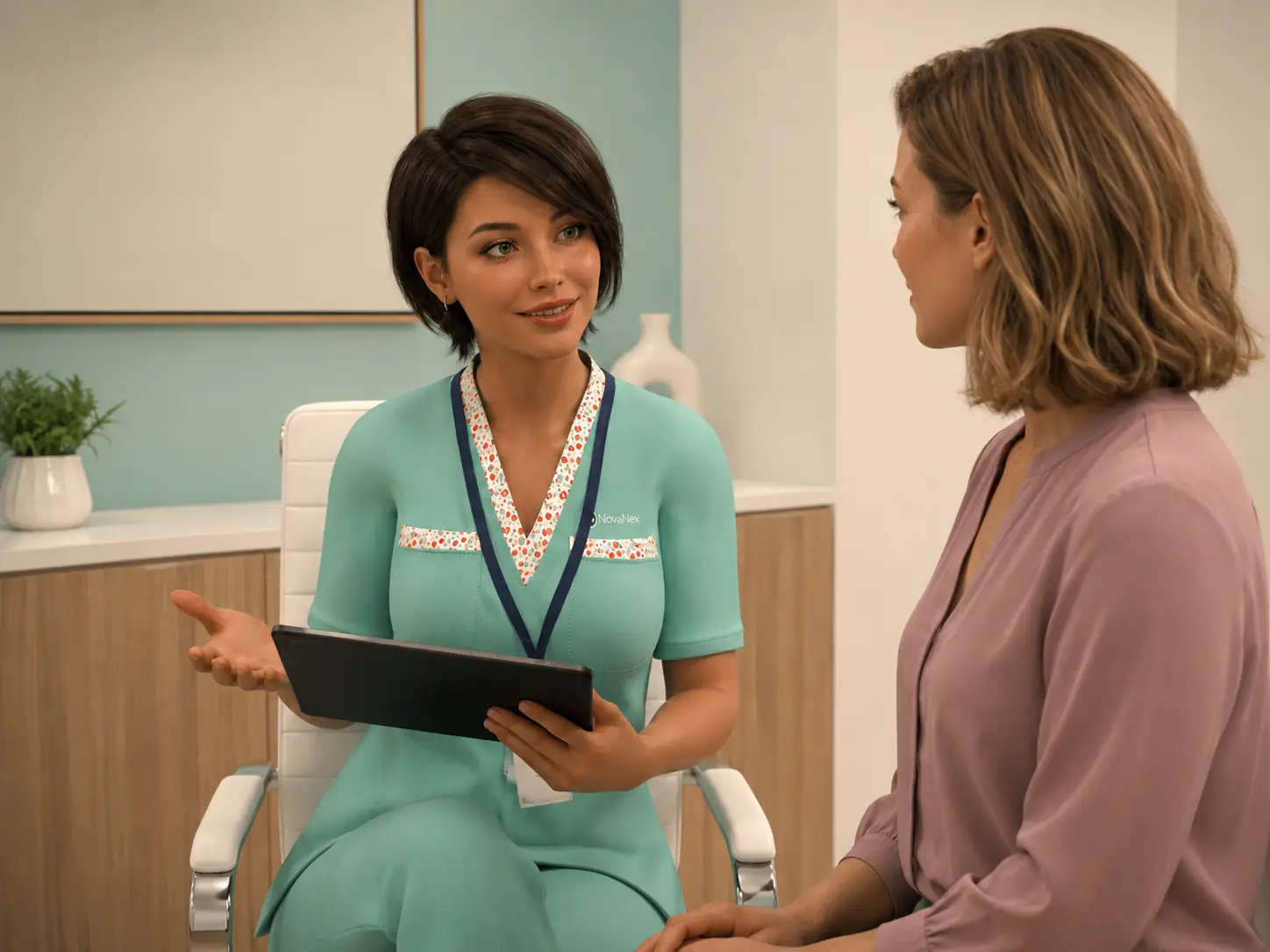
Series 2 is designed for a short, closely monitored recovery despite its broader anatomical and gonadal scope. Clients remain under short-stay observation for 24–48 hours, usually return to many ordinary routines within days, and commonly receive progressive activity clearance around one month after treatment. Typical overall recovery spans 4–5 weeks. Temporary swelling, scrotal tenderness, sensitivity changes, urinary adjustment, and hormonal recalibration are expected parts of early adaptation.
24–48 hours
Short-stay monitoring
Within days
Return to ordinary routines
Around day 30
Typical activity clearance
Minimal visible scarring
Precision closure
Swelling, a sense of weight, and tenderness around the new scrotal anatomy are expected during the first days and usually improve steadily with support and rest.
Sensation may initially feel unusually strong, muted, or inconsistent as the extended neural pathways and gonadal tissues settle.
Urination may feel unfamiliar while adapting to the extended urinary pathway, but early changes are usually mild and short-term.
Unexpected erections can occur during neural recovery. Your care plan explains positioning, support, and when to contact the team if discomfort persists.
Sitting, walking, and changing position can feel different at first. Supportive underwear and softer seating help protect the scrotal area while swelling settles.
Energy, temperature awareness, and reproductive timing may feel temporarily different while the converted gonads and regulated hormonal framework stabilize.
If anything feels concerning or outside expectations, your NovaNex care team is available around the clock during early recovery.
Series 2 combines predictive screening, personalized biological mapping, robotic neurovascular alignment, gonadal tissue-viability monitoring, and structured endocrine follow-up to support dependable integration across the complete pathway.
Temporary concerns such as prolonged localized swelling, sensitivity variation, urinary recalibration, or slower hormonal stabilization are usually managed through guidance, short-term medication, supportive care, or outpatient review.
Clinically significant integration, urinary, endocrine, or fertility concerns are uncommon. Scheduled follow-up helps identify changes early and coordinate targeted treatment or refinement when additional support is needed.
Most
recover without
clinical adjustment
Uncommon
moderate complications
Rare
serious adverse outcomes
Series 2
"Series 2 felt like a big decision, but not a reckless one. The medical team made the science feel understandable and the choice feel fully mine."
Series 2
"I was nervous before my first consultation, but nobody rushed me. They answered the awkward questions with the same care as the easy ones."
Series 2
"For us, Series 2 was about partnership. I wanted to take on a different role in creating our family, and NovaNex helped make that possible."
Choose a down payment

$675.00 due initially, then
$7,895.00 total payable
Financing provided by Everwell Medical Finance. Eligibility is confirmed before scheduling.
Series 2 is NovaNex's sperm-producing transformation pathway. It adds integrated phallic and scrotal anatomy, converts ovarian tissue into paired sperm-producing gonads, and preserves the uterus and capacity to carry a pregnancy.
Series 2 introduces a patient-matched phallus and scrotum, extends the urinary pathway, converts ovarian tissue into sperm-producing testes, and establishes external and internal sperm routing. The uterus and vaginal anatomy are retained. Egg retrieval and cryogenic storage are included before conversion to preserve future fertility options.
Yes. Series 2 preserves the uterus in a managed ready-to-receive state. Pregnancy is possible when a compatible ovum is provided and viable sperm is present through the internal routing pathway or a planned fertility procedure.
Series 2 clients can contribute sperm to ovum-producing partners, including non-transformed women and Series 1 clients. They may also carry a pregnancy when a Series 1 partner, stored ovum, donor ovum, or another clinical pathway provides the ovum. Two Series 2 partners cannot ordinarily conceive together without an external ovum source.
Series 2 does not preserve ordinary ovulation or menstruation. It maintains a regulated hormonal framework supporting sperm production and uterine readiness. Temporary stabilization medication or individualized support may be needed, but lifelong hormone treatment is not automatic.
Series 2 cannot be converted to Series 1 or restored to ordinary ovulation because the ovarian gamete system has been permanently repurposed for sperm production. Visual or functional revisions may be possible, but they do not restore ova production. Fertility preservation is therefore completed before the procedure.